
by SoggyMD
Introduction:
In contrast to the rather practical and well-rounded MZ-N10, the MZ-E10 was designed with exactly one goal in mind: be the absolute thinnest MiniDisc player to enter production, and hold that title for as long as possible. In this aim, the E10 more than hit its mark - no manufacturer could ever quite overcome the razor-thin slab that is the E10, which sits at a positively remarkable 9.9mm and 55g net weight. However, in achieving this, nearly all efforts to make it usable and reliable must’ve been considered unimportant. In what I can only imagine was an extreme case of tunnel vision, the unit that would reach consumers in 2002 would be (while an incredibly impressive achievement) the most compromised and fragile MD player ever brought to market.
Form factor:
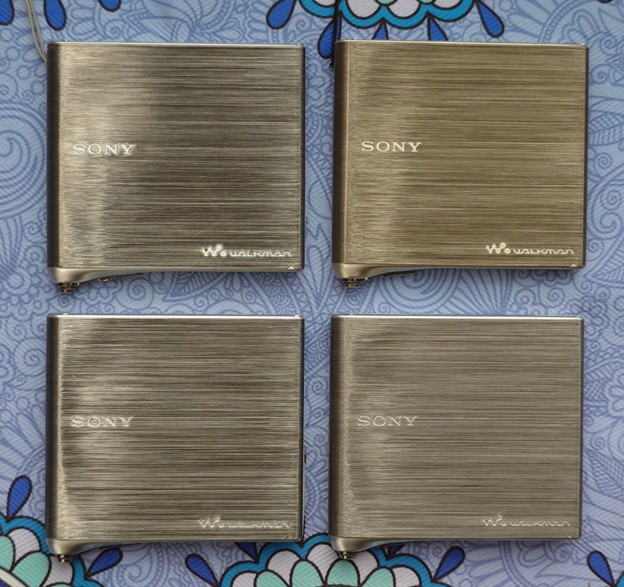
At first glance, the E10 sports a stunning brushed magnesium finish and is almost impossibly light in the hand. Even with a disc inside, it’s easy to forget it’s in your pocket. In fact, I’ve done so more than once - something that hasn’t happened to me with any other MD unit. Standing at just under two discs thick, it’s a technological marvel of miniaturization that still looks and feels futuristic 23 years on from release. It’s hard to get a good grasp on just how tiny the E10 is until you’ve seen one in person. Unfortunately though, first impressions can be deceiving.
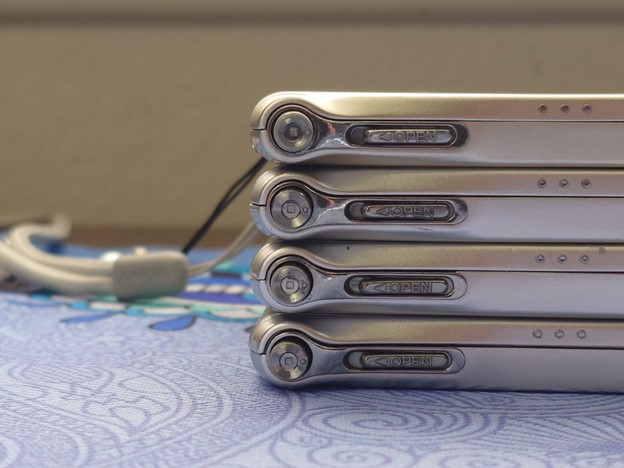
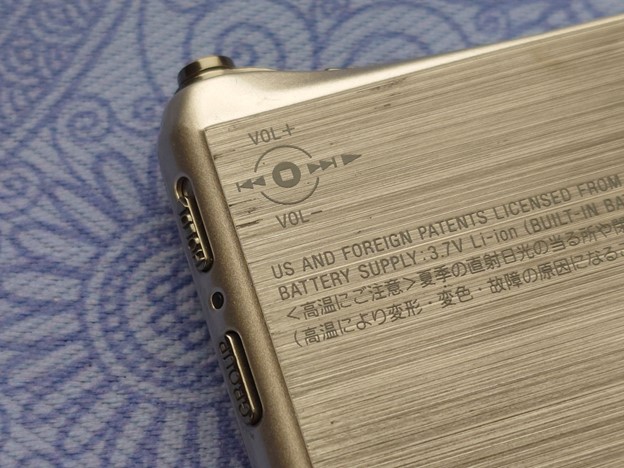
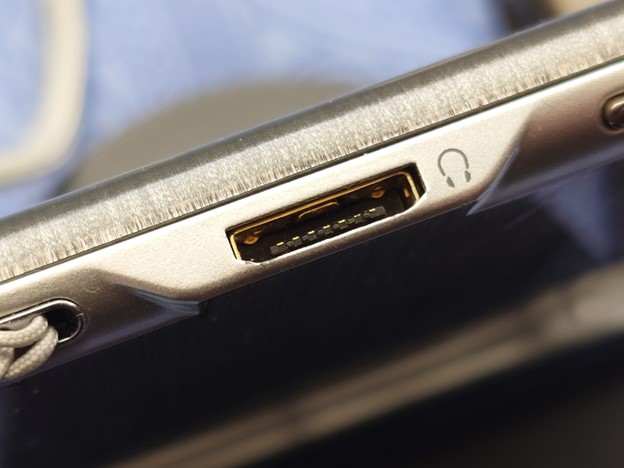
When actually attempting to use an E10 in the modern day, cracks in the otherwise beautiful facade begin to show through almost immediately. Imagine you’ve just gotten an E10 in the mail, and you’re excited to start using it. First of all, that magnesium finish you’ve seen shimmering in photos is known to oxidize seemingly at random to a dark black color - so if yours is still shiny, consider those days numbered. You’d then notice the unit is also incredibly awkward to use without the remote - it’s hard to tell which way the unit is intended to be held in the hand, and it certainly doesn’t help that the little control knob on the side of the unit is too vague to operate with any real accuracy. Even if you managed to get past that hurdle, you’d also figure out that there’s no AUX jack of any sort. The only way to pump audio straight out of the E10 is with a specialized and rather ugly dongle. Considering all that, you’d then probably want to hook up a remote for ease of use… only to notice that the standard remote jack Sony used for just about every other MD unit produced is also absent - replaced with a unique connector specifically made for the E10. The only remote that will connect to the E10 is an offshoot of the RM-MC35ELK: the RM-MC35ELKU. This remote can be both hard to locate and heinously expensive to purchase if your unit doesn’t come with one.
Okay. Well, maybe all that isn’t the end of the world. After all, it’s still an incredibly impressive machine and you’ll tolerate a few compromises for the ultimate in MiniDisc portability. You’re still excited to get to using your new machine, so you decide it’s time to charge up the internal Li-ion battery… only to realize none of your MD charging equipment is compatible.
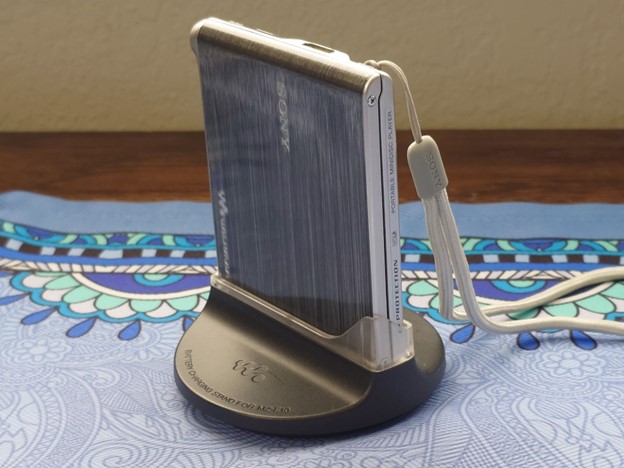
See, the E10 needs a 6V power supply with an L-shaped tip that connects to a cheap-feeling plastic docking cradle. While small and finicky adapters have come out of the community more recently to directly connect to the small docking port on the unit, the best way to charge an E10 is with the original cradle - which, even then, isn’t very well designed. Unlike most other docks, the E10 sits in it very loosely and can easily be knocked out of position. While it does look nice, standing in a way that shows off its paper-thin stature fantastically well, it brings us to one of the other major faults the E10 has: reliability.
Practicality and Longevity:
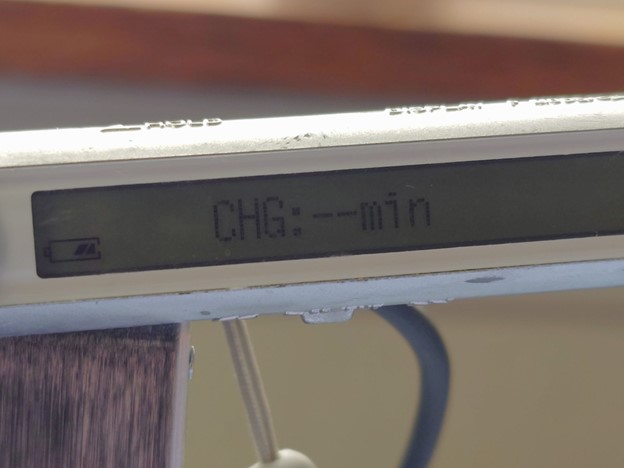
The E10 has a spectacularly high failure rate with more potential issues than one can count on their hands. The most common, though: inability to charge properly. Even with a brand new battery, E10s can sometimes refuse to charge thanks to an issue with the power switch board. I know this because I have encountered this issue personally… twice. I have four E10s, and two of them sort of work - but neither right out of the gate. The two broken units are essentially bricks, with their motherboards and laser assemblies completely fried, but their power switch boards and batteries were mostly okay. Meanwhile, the semi-functional pair arrived with dead batts and unable to charge. I swapped those parts out, as well as a bunch of other temporary swaps to determine what parts did and didn’t work. What I ended up with was two units begging for death, two no longer having to, and all too much familiarity with the E10 as a fragile and frustrating machine to work on.
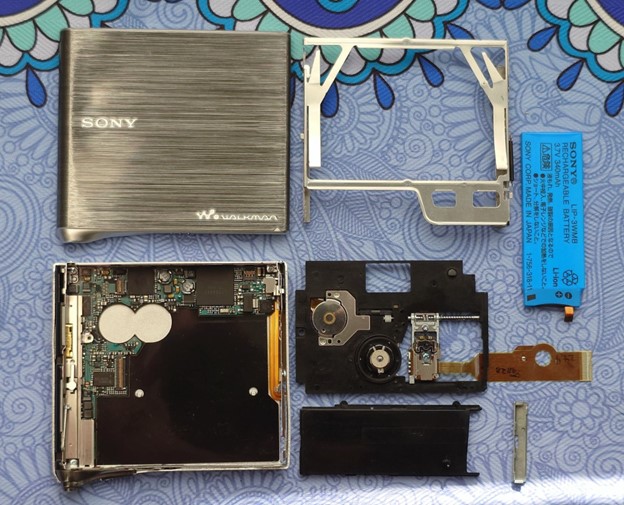
The construction of the E10 is fairly unique by MD standards. There are numerous cutouts in the optical assembly as well as the motherboard to allow for some incredibly tight tolerances. I can only imagine the sort of discussions Sony’s engineers had to have to figure out how everything could possibly fit in under 10mm of vertical space. As a result though, nearly every single component on the E10 is incredibly fragile and prone to breaking under the slightest stress. Let’s start with the midframe that holds the lid on, for example - it’s so thin that the necessary bending required to remove it from the device can easily become permanent. Of my four units, two ended up with minor bends despite using an abundance of caution and gentle treatment. This bend can result in the lid not sitting perfectly flush with the bottom casing and some awkwardness when inserting a disc. Luckily, I was able to transplant the non-bent midframes into the playable units when I got done with them.
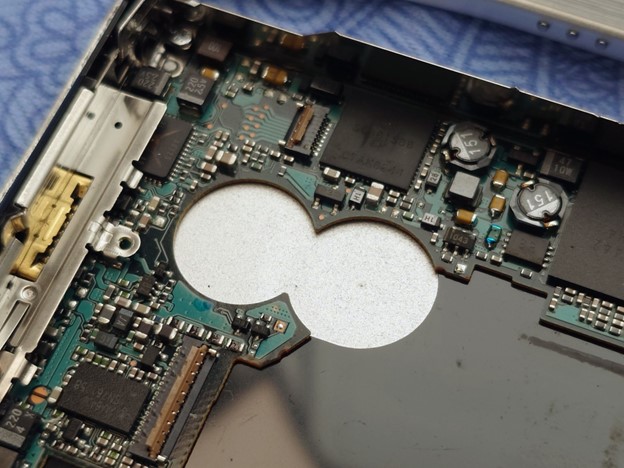
This fragility also applies doubly to the motherboard, which is bolted directly to the incredibly thin rear casing. Even the mildest of dents can cause traces to break, which is what often causes strange issues and outright failures with many E10s. I described two of my units as “semi-functional” because both have fairly major issues that make using them a painful experience. My silver unit is especially peculiar, as upon powering up it will act as normal but after a song or two will refuse to listen to any input from the remote or otherwise. It needs to be shut off and powered on again to regain control, which is immensely annoying if you need to change volume or pause a disc. The other, a champagne unit, will listen to anything you tell it to do… but will loudly complain the entire time. I have taken apart and lubricated it three times now, and no matter what I do there’s an ear-piercing shrieking and grinding noise that comes from the laser mech when seeking. I haven’t been able to find any cracked, clogged, or broken gears - I can only assume there’s a slight bend somewhere I haven’t noticed causing this issue. Amazingly though, it will continue to play just fine and hasn’t quit on me yet. For that alone, I can’t say that the laser mech itself is particularly fragile as compared to other players. Nonetheless, it also needs to be actively playing music to charge the battery, as otherwise it will give up after about thirty seconds on this unit I have.
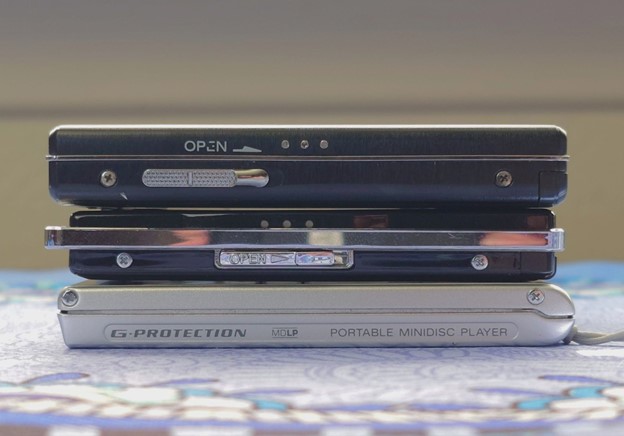
Now, I want to make a point here - while the E10 may be the thinnest unit overall, it isn’t by a wide margin. The Panasonic SJ-MJ97 for example, at 11mm, tends to be far more reliable and not nearly as fragile or oddly put together. (These units do have a 2.5mm AUX instead of a 3.5mm though, so some compromise still exists, but the remote connector ring is shared with other units.) Similarly - the MZ-EH1 from my last review, at a mere 12.8mm, still manages to pack in a full-size 3.5mm headphone jack and standard Sony remote port while also being a far more capable unit. It seems those last couple millimeters really made a difference, even if the E10 was also a couple years ahead of the curve.
Unfortunately the E10’s barrage of issues and rare, unique, or necessary peripherals makes for an incredibly expensive unit to locate in complete and fully-functional condition. I was lucky enough to piece together several cheap untested units into a couple of semi-decent ones for quite a bit less than a single nice unit, but I wouldn’t recommend anyone else attempt the same. You may not be so lucky in locating enough functional parts in the process, and at the end of the day you’ll still have the frustrating task of assembling and reassembling these things time and time again to get a desirable result. Having the dock, power cable, and remote included with any one of them is also far from a guarantee.
Sound:
I can’t really talk about a MiniDisc player without addressing the topic of sound quality, but all in all the E10 is simply unremarkable (albeit perfectly capable) in this department. It sounds like pretty much any other unit made in the year or two surrounding it. The only perceptible difference might be a slight increase in stereo separation over units like the MZ-E510, but I’ve gone back and forth on that in my tests enough to say it’s negligible at best. (To note, I test by connecting an identical set of JVC HA-FDX1 IEMs to each unit with duplicate MDs playing the same track at the same time, switching out between them.) The six-band equalizer is a nice feature, but also fairly standard on units from this point in time. The same goes for the pitch adjust, or various sound modes. All in all, it’s just another MD player.
Conclusion:
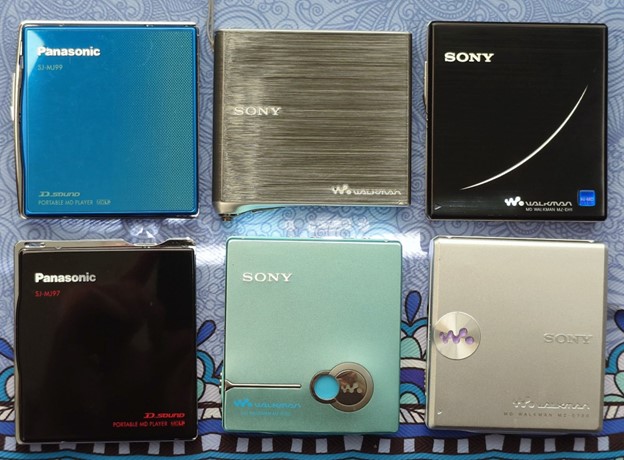
I didn’t go into this review thinking it’d be so negative overall, but the more I thought about it and used my two units for the last few weeks, it became startlingly clear that I couldn’t recommend the MZ-E10 to anyone besides my fellow obsessive MD collectors. While it’s undeniably a technological masterpiece and Sony should rightly feel proud of themselves for having achieved what they set out to, there’s really no upside to owning one in the modern day. Other units simply do everything the E10 can but better, at least beyond meeting esoteric and specific measurements that make for an all-time record. If you want a thin MD player that can easily hide in a pocket while remaining practical and relatively affordable, I’d recommend something like an MZ-E730. An easily found, great sounding unit that won’t break the bank or probably in general.
The MZ-E10 is akin to a concept car celebrating a brand’s achievements rather than a full-on production model. Stunning to look at, very impressive, and looking to the future - but completely form over function. In this case though, Sony had the courage to actually put it into production, which should be applauded. So few truly unique things like this are produced in the modern day because the risk of failure is simply too great. Despite everything I’ve written above, I’m very glad the E10 was made and released to the public. As a result, we as MiniDisc enthusiasts have one more interesting thing in our repertoire of useless knowledge to talk about. That alone makes it more than worthwhile.
–SoggyMD